
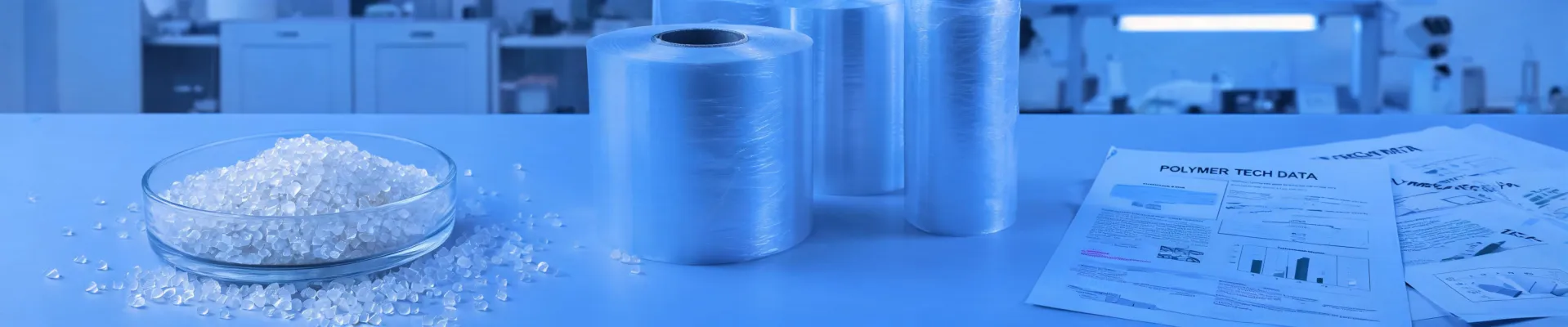
Every year I review roughly 200 incoming polymer shipments for a global manufacturer. I've rejected about 7% of first deliveries — not because the material was always bad, but because the paperwork didn't match the physical reality. This checklist is what I use when I have to approve polypropylene, polyethylene, EVA, or any other polymer grade. If you're sourcing materials for piping, packaging, or molded parts, it will save you from the mistakes I've already made.
Who this checklist is for
This is for engineers, purchasing managers, and plant operators who need to make a call before an order lands. It's not a polymer chemistry course. It's a practical list: what to ask, what to check, and what to ignore. In my experience, most polymer quality problems don't come from exotic failures. They come from missing specs, poor traceability, and assumptions. This checklist handles those.
The 6-step checklist
Here's the exact sequence I follow. Steps 1 through 3 happen before ordering. Steps 4 through 6 happen around receiving and production.
Step 1: Define service conditions first
Before you call any supplier, write down the conditions the material will face: temperature, pressure, chemical exposure, UV, impact, and whether it touches food or drinking water. If you don't know these, every later step is guesswork.
The simplest starting split is this: polyethylene is tough and chemical-resistant; polypropylene is stiffer and handles higher temperatures; EVA adds flexibility and adhesion but softens more easily. That's an oversimplification, but it's where the conversation starts.
Step 2: Understand the polymer family names
One question that keeps showing up in search is polyethylene vs plastic. That's not a real comparison. Polyethylene is a plastic. The real comparison is between types of polyethylene and other polymer families.
Low-density PE (LDPE), linear low-density PE (LLDPE), and high-density PE (HDPE) all behave differently. HDPE is usually the one used for pipes because of its stiffness and stress-crack resistance. Polypropylene is a separate family, often used for piping and molded parts because of better heat resistance. EVA is a copolymer — polyethylene with vinyl acetate — and it's used in solar encapsulants, hot-melt adhesives, and foams.
Step 3: Ask for the exact grade, not just the brand name
LyondellBasell products cover many of these families, including polypropylene, polyethylene, polycarbonates, and EVA. But the brand only gets you so far. A LyondellBasell EVA grade for solar encapsulants is not the same as an EVA grade for adhesives. You need the full grade designation.
For polypropylene, check the melt flow rate (MFR) using ISO 1133 or ASTM D1238. For polyethylene piping, ask for the resin classification (PE4710 or PE100, for example) and the long-term hydrostatic strength. For EVA, check the vinyl acetate content and melt index. Melt flow rate, density, tensile strength, impact resistance. In that order for most applications.
Step 4: Verify traceability before delivery
Ask for batch numbers, certificates of analysis, and mill test reports. In 2022, I made it a rule: no CoA, no unloading. That one rule cut our documentation rejections by roughly half.
If you're searching 'HDPE pipe nearby,' location is convenient, but it's not enough. A local warehouse with traceable material is great. A local warehouse without paperwork is a future problem. For something like 4-polypropylene plastic piping, the pipe itself should carry markings for the material code, pressure rating, and applicable standard. If those aren't there, the certificate doesn't matter.
Step 5: Inspect the physical shipment on arrival
Don't rely on labels and paperwork. Open a bag or a box. Look at the pellets: color, size, contamination, moisture. For pipes, check dimensions, wall thickness, and markings.
I remember one order where I had two hours to decide whether to accept a resin substitution before the line restart. Normally I'd run a full physical inspection and wait for test results, but there was no time. I approved it based on the datasheet alone. Not ideal, but workable. It turned out fine, but I wouldn't count on that again. Since then, I've always made time for a receiving check.
Step 6: Run a pilot before full production
Even a small trial tells you more than any datasheet. If you're injection molding, run a few parts and check shrinkage and warpage. If you're making film, test seal strength and clarity. For adhesives, test peel after aging. For piping, test pressure and fitting compatibility.
A pilot run is the cheapest insurance you'll ever buy. Skipping it to save two days is a lesson learned the hard way — and I've seen it happen more times than I'd like.
Common mistakes I still see
Confusing the polymer family with the grade
Polypropylene is not a complete specification. Neither is polyethylene. You need the grade, the additivation, and the standard. Otherwise, you're buying blind.
Trusting verbal promises
I still kick myself for not documenting a vendor's promise about UV stabilization. If I'd gotten it in writing, we'd have had a basis to reject that lot. Now every contract includes the specific additive package and the test method.
Skipping standards because the application is simple
If the pipe carries potable water, NSF/ANSI 61 matters. If it's exposed to sunlight, check UV stabilization. If it's used at elevated temperature, look at the hydrostatic design basis. You don't need to memorize every standard, but you need to know which one applies to your use.
Bottom line
An informed customer asks better questions and makes faster decisions. I'd rather spend 20 minutes explaining the difference between HDPE and polypropylene than deal with a mismatched shipment later.
There's something satisfying about a batch that clears every check and then runs clean in production. The best part of getting this checklist right: you stop worrying about materials and get back to actually making things.