
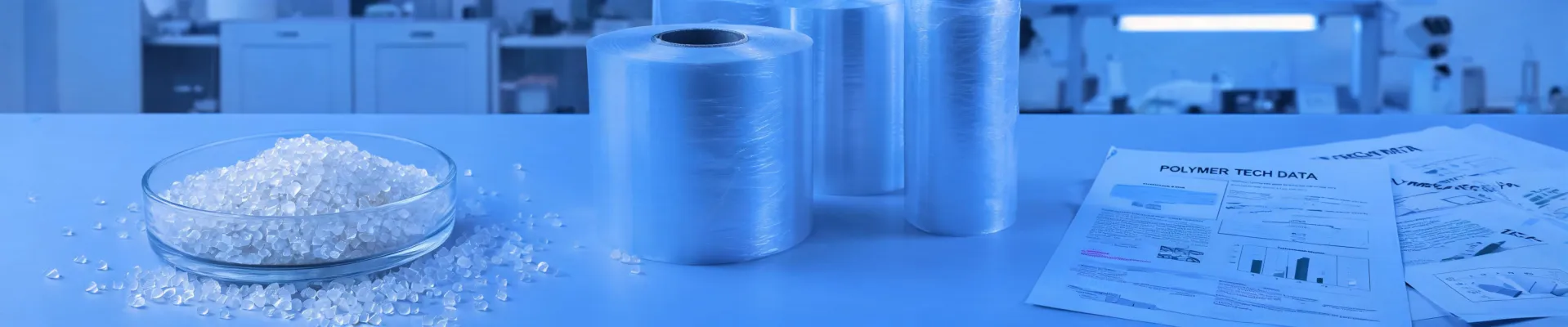
Sixteen years in plastics—nine in custom injection molding shops, seven in technical service at LyondellBasell. I've personally made (and documented) 28 significant material selection mistakes, totaling roughly $850,000 in wasted resin, tooling, and rework across my projects and customer issues. Somewhere around mistake #19, I started maintaining a checklist. This article is that checklist, organized as the comparison I desperately needed in my first year.
My first mistake: I specified HDPE (resin code 2) for a part that needed a living hinge. It looked right—high impact strength, good chemical resistance, affordable. Then the hinge snapped on the test bench in 45 minutes. That's when I started learning the difference between polypropylene and HDPE. Datasheets don't fail. Parts do.
HDPE and PP are the two workhorses of the plastics industry. They look similar on paper, they're both made in enormous volumes, and they're both in LyondellBasell's portfolio. But they fail differently, process differently, and repair differently. Here's what 16 years of scar tissue taught me.
Dimension 1: Impact vs. Fatigue
From the outside, HDPE looks tougher. Higher room-temperature impact strength, better cold-crack resistance, a stiffer, more "industrial" feel. That's what I assumed in 2009, and it's wrong—or rather, it's only half the story.
HDPE is impact-resistant. It shrugs off drops, bumps, and blunt force. That's why it owns bottles, fuel tanks, and cutting boards. But it has a blind spot: repeated flexing.
Polypropylene has extraordinary fatigue resistance. A living hinge in a well-designed PP part can flex hundreds of thousands of times without cracking. The same hinge in HDPE? It often fails in the low thousands of cycles. I want to say our test showed it failing around cycle 8,000—but don't quote me on the exact number. The point is that it failed in under an hour of testing.
We switched to a LyondellBasell polypropylene grade (Moplen), and the same hinge design passed 200,000 cycles without visible wear. Same part geometry. Same test rig. Only the material changed.
Selection rule #1: Repeated flexing means PP. One-time impact or cold-environment use means HDPE. If your decision is driven only by the impact column, you'll get the wrong answer.
Dimension 2: Chemical Resistance—the Legacy Myth I Believed
The "HDPE is the most chemical-resistant plastic" idea comes from an era when HDPE replaced steel in chemical storage tanks. That reputation is well earned, for acids, bases, and solvents in static conditions.
But there's a failure mode that doesn't show up in general chemical resistance charts: environmental stress cracking (ESCR). ASTM D1693 is the standard test. It measures how long a material survives when exposed to a specific chemical while under continuous stress.
In 2023, a customer's HDPE detergent bottles started splitting along the sidewall after 90 days in the distribution warehouse. The bottles were under flexural stress from stacking, and the surfactant chemistry attacked the polymer. Classic ESC. We didn't have a formal ESCR review in our material qualification process at the time. It cost the customer a $340,000 production run, and it cost me weeks of credibility repair.
PP resists ESC in most surfactant and detergent environments significantly better than HDPE, which is why you see more PP migrating into packaging applications that HDPE used to own. But—and this is the flip side—PP is more vulnerable to UV degradation and oxidation outdoors. Leave unstabilized PP in the sun and it embrittles. HDPE ages better.
Oh, and I should add: ESCR varies by grade, not just by polymer. Two HDPE resins from the same supplier can differ dramatically in D1693 results. I made that assumption once. Never again.
Selection rule #2: Chemical contact plus mechanical stress means you demand the ESCR data before confirming the grade. Surfactants and detergents? PP leads. Outdoor exposure without protection? HDPE leads.
Dimension 3: Fabrication—Two Different Headaches
People assume that materials which look similar process similarly. They don't—each has its own way of making you look bad.
PP flows well and fills thin walls easily, which is why it dominates packaging and thin-wall moldings. But it shrinks and warps. Inconsistent mold temperature produces sink marks and dimensional drift. I've seen PP formulations blamed for warpage that was actually a cooling-time problem. The part might come out of the press looking perfect, then curl overnight on a storage rack.
HDPE shrinks more overall—roughly 1.5–4% depending on grade and wall thickness, compared with PP's 1–2.5%. That means more attention to mold compensation. It also demands higher injection pressures for thin-wall parts. But HDPE has one major fabrication advantage: it's easier to weld and repair, because its molecular structure bonds readily to itself under controlled heat. PP melts at roughly 160–170°C; HDPE melts at around 120–135°C. If you're welding either, don't trust "looks melted" as your temperature gauge.
That weldability difference matters more than most engineers think. It determines whether your product can be serviced in the field—or becomes a throwaway. Which brings me to the question I get asked more than any other.
Bonus: How to Repair Polyethylene Plastic
"How to repair polyethylene plastic" is one of those searches that exposes how much bad advice is out there. I learned the hard way: my first polyethylene repair attempt used epoxy on an HDPE water tank fitting. It looked solid for about 20 minutes. Then it let go. Water everywhere.
The most frustrating part of polyethylene repair: almost every adhesive you naturally reach for—epoxy, super glue, "plastic epoxy"—refuses to bond. Polyethylene's surface energy is too low. The adhesive sits on top like a sticker and fails under the lightest load.
Here's what actually works:
- Clean and abrade. Wash the area, then create texture with 80–120 grit sandpaper or a wire brush.
- Use heat, not glue. A controlled hot-air plastic welder with a polyethylene filler rod creates a true molecular bond. Target temperature: roughly 250–300°C (480–570°F). Smoke or browning means you're too hot. From the outside, welding looks simple—the reality is that technique matters as much as temperature.
- Identify the polymer first. Resin code 2 is HDPE; resin code 5 is PP. Welding PP with an HDPE filler rod won't fuse properly—different chemistry. The filler rod must match the base polymer.
- For non-structural repairs, use specialty adhesives—but only with surface prep. Flame treatment, corona treatment, or a chemical primer is required. Skip it, and you're back to 20-minutes-then-fails territory.
For anything load-bearing, replace the part. That's the boundary of repair. Knowing the boundary is part of knowing the material.
Dimension 4: When the Right Answer Is Neither PP nor HDPE
This is the lesson that governs everything I do now: LyondellBasell's advanced polymer solutions cover polypropylene, HDPE, EVA, polycarbonates, and compounds—a portfolio broad enough that I can be honest when a material is wrong for a job, even if we sell it.
Take EVA foam insoles. A footwear manufacturer came to us asking about PP or HDPE sheet as an insole support layer. Technically, you could thermoform either into a footbed shape. It would be rigid, uncomfortable, and crack after weeks of flexing—not because the polymer failed, but because the polymer was wrong for the job from the start.
EVA (ethylene vinyl acetate) foam—specifically our Ultrathene EVA copolymers—is the right material for insoles. Its closed-cell structure gives the shock absorption, flexibility, and compression-set resistance that a footbed requires. We said so directly, even though the customer came asking about two other materials in our portfolio.
Why do we do that? Because I'd rather recommend the right product from a different part of the portfolio—or from another supplier entirely, if that's the truth—than watch a customer fail with a technically possible but genuinely wrong material choice. When they fail, they don't remember that they specified the polymer. They remember that we approved it.
I'd rather work with a specialist who knows their limits than a generalist who overpromises. I try to be the former.
The Checklist That Cost $850,000 to Build
This is the distilled version of what I'd put in front of my 2009 self. Use it, modify it, ignore it at your peril.
- Ask about motion before strength. Repeated flexing pushes you to PP. One-time impact or cold temperatures push you to HDPE. Clarify the loading mode first.
- Demand ESCR data (ASTM D1693) when chemicals and stress coexist. If the chemical is a surfactant or detergent, PP leads. If the part lives outdoors, HDPE leads. And never assume a grade's ESCR from the polymer name alone.
- Respect the processing trade-offs. PP's warpage and HDPE's shrinkage are manageable—but only if you design for them. Plan for mold compensation and temperature control.
- Decide the repair pathway early. Field-repairable products favor HDPE's weldability. Disposable or factory-service products can use either.
- Challenge your own material default. If the answer came to you in under 10 seconds, you've probably made this decision before. That's not inherently wrong—but it's worth 10 more seconds of checking.
- Talk to someone who will say no. LyondellBasell technical service engineers won't stamp a material that's wrong for your application, even if it's in our line. It's not a business weakness. It's how trust gets built.
The bottom line: PP and HDPE are not interchangeable, despite looking similar on a datasheet. HDPE resists impact, welds easily, and survives sunlight. PP resists fatigue, shrugs off surfactant stress, and processes into thin walls. Match the material to the motion, the chemistry, and the repair plan—and you'll be fine. Ignore any of the three, and you might be writing your own mistake-count article someday. And above all, work with a supplier that tells you the truth about boundaries. That, more than any datasheet, is what prevents the $340,000 surprise.