
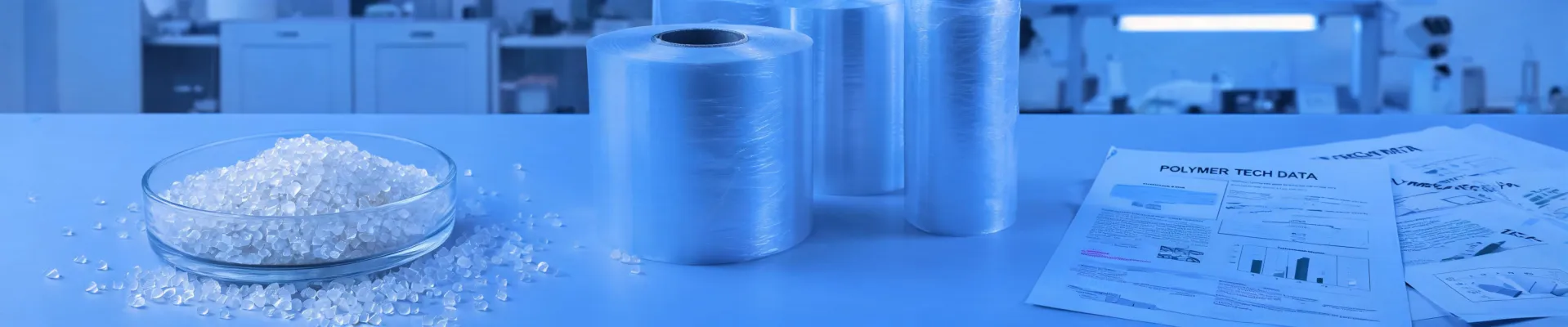
I'm an office administrator for a 40-person plastic parts manufacturer. I place around 60-80 orders a year, mostly polymer resins, packaging materials, and the occasional sample order. When I took over purchasing in 2020, I lost a week to a spec mix-up because I didn't verify what the supplier meant by 'standard grade.' This checklist is what I use now for material orders. It's written for small and mid-sized buyers, not just sourcing teams with legal departments. I checked the public LyondellBasell website in March 2025 while preparing this.
What This Checklist Is For
Use this when you need to:
- Check a material's technical data before you buy.
- Access account documents and invoices through the lyondellbasell login area.
- Confirm you're ordering the right polymer family.
There are five steps. None are hard, but skipping the first one is how I ended up with 500 kg of the wrong resin.
The 5-Step Checklist
Step 1: Nail Down the Polymer Family First
This sounds obvious, but it's the most common mistake I see in my own work. Before you do anything else, answer one question: Is this a thermoplastic or a thermoset? Are you ordering HDPE, PP, PE, PLA, or epoxy?
If you came here with a search like 'hdpe epoxy', let's clear that up. HDPE is high-density polyethylene, a thermoplastic. Epoxy is a thermosetting resin. They are not the same family and they are not interchangeable. You need to know which one your production line actually uses.
The same goes for 'is pla polyethylene or polypropylene?' The answer is neither. PLA is polylactic acid, a bioplastic made from fermented plant starch. It is not PE and not PP. If you need PLA, search for PLA. If you need PE or PP, search for PE or PP separately.
Once you know the polymer family, use the lyondellbasell website to browse the right product category.
Step 2: Pull the Datasheet, Don't Rely on Memory
Once you have the polymer family, find the exact grade. The lyondellbasell website has product pages with datasheets and processing guidance. You can do this without being a plastic engineering expert; you just need to check three things:
- Melt flow rate or viscosity, if available.
- Density, which for typical HDPE datasheets I've handled is around 0.94-0.965 g/cm³. If the number looks off, you may be looking at a different product.
- Additives or modifications, such as anti-block, slip, UV stabilizers, or food-contact claims.
Why bother? Because the same product name from memory can mean different things. I learned this after assuming two polypropylene grades from different suppliers had identical specs. They didn't. One ran fine; the other clogged filters and made the production manager very unhappy.
On the lyondellbasell website, look for product detail pages with 'Literature' or 'Technical Data' tabs. You can download the PDF and keep it with your purchase record. This has saved me more than once when someone asked, 'why did you buy this grade?'
Step 3: Use the LyondellBasell Login for Account Documents
The public site and the customer login are two different things. The lyondellbasell website gives you general product information. The lyondellbasell login area is where you can access order history, invoices, and sometimes product documentation tied to your account.
If you're already a customer, find the login link in the site header. If you need a new account, plan for a short approval process. When I set up ours in 2021, it took a few days. Not the end of the world, but if you have a tight deadline, start this early.
I log in mostly for three reasons:
- To re-download a missing invoice. The vendor who couldn't provide proper invoicing cost us $2,400 in rejected expense reports, so I don't mess around with paper receipts anymore.
- To check the status of an order before finance asks where the money went.
- To confirm that documents like certificates of analysis are available for a specific lot.
(Mental note: I still need to turn on two-factor authentication. I keep putting it off, but for a login that holds order history, it's a no-brainer.)
Step 4: Ask Technical Questions Before You Place the Order
I'm not a materials engineer. I'm the person who makes sure the engineer and the supplier can talk to each other. If there's any ambiguity, send a short email with three numbered questions. Don't assume the supplier's 'as soon as possible' means the same as yours. That phrase once cost me two weeks because 'soon' to them was 'whenever convenient'.
For technical questions about processing temperatures or mold shrinkage, use the contact form on the lyondellbasell website and reference the product code and datasheet version. In my experience, the technical support team responds faster when you give them that context.
And don't hide the fact that you're a smaller buyer. I've had vendors treat small orders like a favor. I don't work with them anymore. A good supplier answers a reasonable technical question whether you're buying 100 kg or 10,000 kg. Small orders are not a reason to give worse service.
Step 5: Start Small, Verify, Then Scale
If it's a new grade or a new supplier, don't order truckloads on faith. Start with a trial quantity that matches one production run. This is common sense, but it goes against the grain when a bulk price is tempting.
When I was starting out, the vendors who treated my $300 trial orders seriously were the ones I called first for $30,000 orders later. I've also seen bigger buyers order huge quantities based on a single sample, only to discover the production batch looked nothing like the sample. A trial order under actual production conditions tells you more than a one-off sample.
Small doesn't mean unimportant. It means potential.
For LyondellBasell specifically, ask about packaging sizes. Some polymers are available in 25 kg bags; others are truckload only. The lyondellbasell website or your customer contact can tell you. If a trial quantity is available, use it. If it's not, ask what the minimum order actually is before you commit.
Common Mistakes I've Made (So You Don't Have To)
Mistake 1: Assuming 'Standard' Means the Same Thing to Everyone
I assumed a 'standard grade' on one supplier's spec sheet matched a 'standard grade' from another. It didn't. The melt flow rate was different, and the parts came out brittle. Now I send the complete spec to the supplier before ordering, not after.
Mistake 2: Mixing Up Polymer Families in Your Search
This is the 'hdpe epoxy' problem. HDPE is not epoxy. PLA is not polyethylene or polypropylene. If you're in plastic engineering or procurement, spell out the chemical family before you search. Otherwise you'll waste time looking at products you can't use.
Mistake 3: Ignoring the Cost of Poor Paperwork
The lowest quote wins on paper but loses in real life if you spend six hours tracking down a missing certificate or a corrected invoice. That's why I verify invoicing and documentation before I place the order. It's a checklist item, not an afterthought.
Final Notes
This checklist won't replace your technical team's judgment. It's meant to prevent the dumb mistakes that eat time and budget. If you take one thing from it, let this be the one: verify the polymer family, download the datasheet, and use the lyondellbasell login to confirm the paperwork will be there when you need it.
That's it. It's not exciting, but it works.