
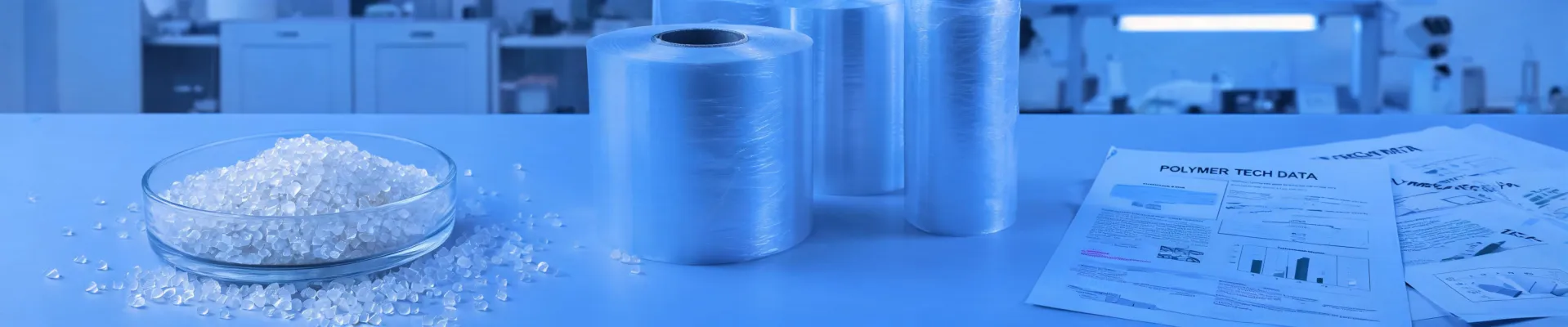
If you're shopping for resin and you type 'polycarbonate vs plastic' into a search bar, here's your first clue that something is off: polycarbonate is plastic. The real comparison is not between one plastic and another generic material. It's between two very different polymer families. I've seen this confusion cause more expensive emergency orders than almost anything else in my supply chain career.
In my role coordinating polymer supply for plastic product manufacturers, I've handled more than 60 rush requests in the last year alone. When a planter order is sitting on a loading dock and the planters crack before they ship, the problem was usually decided months earlier—not by the supplier, but by the way the buyer wrote the spec. The search phrase 'polycarbonate vs plastic' might be where that confusion starts.
The Surface Problem: You're Asking Plastics the Wrong Question
Plastic planters seem simple. They're pots, right? Holds dirt, holds a plant, drains water. But the moment you try to buy them at scale, you run into words like 'polypropylene,' 'polycarbonate,' 'raffia polypropylene,' 'impact copolymer,' and 'UV package.' These words matter. A lot.
A few years ago, I watched a manufacturer choose polycarbonate for a line of outdoor planters because a spec sheet described it as 'stronger.' It was also more expensive and less forgiving in a mold. They spent the next year paying for a decision made in a 10-minute phone call.
The phrase 'raffia polypropylene' deserves special attention. Raffia grades are designed for tape and woven applications—think sacks, tarps, nursery bags. It's not a general-purpose injection-molding material. If someone orders raffia PP to make rigid planters, they're buying a brittle, low-impact part. I see this more often than I'd like.
The Deep Cause: We Compare Categories, Not Properties
The real problem isn't that the plastics industry is trying to confuse you. It's that 'polycarbonate vs plastic' is a category comparison, and categories don't have properties. Grades do.
Polycarbonate is the expensive, tough, heat-resistant option. It has good impact resistance, but it's also notch-sensitive. A small scratch at the top of a planter can become a crack. Polycarbonate can discolor outdoors if the right UV stabilizer isn't in the formulation. And it costs meaningfully more than polypropylene.
Polypropylene is a semicrystalline polymer with strong chemical resistance, light weight, and excellent fatigue resistance. But a homopolymer PP is not the same as an impact copolymer PP. For planters, you generally want an impact copolymer with a UV stabilizer package. That's a specific grade, not a category.
Raffia polypropylene is a separate branch. It's an extrusion tape grade, not an injection-molding grade. If you pick a material because of a keyword without checking melt flow, impact strength, and UV package, you're not buying a material. You're buying a problem.
Why does this matter when you're on the LyondellBasell homepage? Because a homepage is a front door. It shows you the LyondellBasell logo and gives you access to product families, but it won't tell you which grade belongs in your injection molding machine. That's what datasheets and technical support are for.
What This Confusion Costs in Real Money
Let me give you a concrete example from last quarter. A customer needed 30,000 plastic planters. They got quotes on polycarbonate and 'polypropylene.' The PC quote was $1.55 per pound. The PP quote was $0.85 per pound. Each planter weighed 1.2 pounds. On raw material alone, the PC version cost $25,200 more. Did it need PC? No. It needed a UV-stabilized impact copolymer PP. The quote for that was around $0.95 per pound. The cheapest PP quote was for the wrong grade—homopolymer, no UV stabilizer. Taking it would have saved $3,600 up front and cost far more than that in failures.
And I've seen the opposite. A client specified PP to save money, then the planters cracked when a retail customer set them down on a frozen loading dock. The failure rate was 11%. Every failure cost about $4 in material and labor, plus shipping and customer returns. On 30,000 units, that's $13,200 in direct waste. That doesn't include the account being put on probation.
Then there's the time emergency. In March 2024, a manufacturer called on a Tuesday at 2 PM. They needed 14,000 pounds of UV-stabilized impact copolymer PP by Friday. Normal lead time was 10 business days. Missing the deadline meant a $50,000 penalty on their retail program. We found a distributor in another state, paid $1,400 in emergency freight, and got the material on site Thursday evening. The client made the deadline, but only because someone was willing to absorb a rush fee. That fee doesn't exist if you choose the right material three weeks earlier.
I'm not proud of every decision I've made under pressure. Had two hours in one case to choose between a PC shipment and a PP shipment for a planter launch. Normally I'd run a cold-impact test first. No time. I went with PC because it was safer and it cost the client an extra $18,000 in resin. In hindsight, I should have pushed the launch by a week. The pressure felt real, but it was created by an earlier sourcing mistake, not by the market.
What bothers me most isn't material performance. It's communication. In one conversation, I said 'UV-stabilized impact copolymer polypropylene.' The buyer heard 'polypropylene.' We both walked away thinking we had the same thing. It wasn't until the first production samples cracked in a simple drop test that we discovered the mismatch. Same words. Different material.
What to Do Instead: A Smarter Material Sourcing Path
If you're on the LyondellBasell homepage right now, or any supplier's site, here's the process I've landed on after years of rush orders.
- Define the service environment first. Outdoor or indoor? Sun exposure? Winter handling? Potting mixes with fertilizers? This decides the UV package, the impact modifier, and whether PC is even needed.
- Name a grade family, not a category. 'Impact copolymer PP with UV stabilizer' tells a processor more than 'plastic planter material' or 'polycarbonate vs plastic.'
- Ask for test data. Impact resistance per ASTM D256, weathering behavior per ASTM D4329. If a supplier can't provide both, ask yourself why you're trusting them with a deadline.
- Prototype before you commit. Put a filled planter in a freezer at -10°C for 12 hours and drop it from counter height. A 24-hour test can answer more than any datasheet.
- Add a buffer on first orders. Give yourself two extra weeks the first time you use a new grade. Rush fees disappear when you leave room to fail safely before the real deadline.
The LyondellBasell logo is a sign of a serious producer, and the LyondellBasell homepage is a useful starting point for understanding what's available. But the logo won't decide between PC and PP. It won't know that your plastic planters will sit in full sun in Arizona or in a damp greenhouse in Oregon. That's your job. From experience, the cheapest quote is rarely the cheapest material. Total cost includes wasted labor, emergency freight, lost customers, and rework. If you're deciding under pressure, slow down just enough to get the grade right. That's the difference between a supplier who delivers in an emergency and one who creates the emergency.